
No products in the cart.
High vs Low Nicotine Vape: What Do 2% and 5% Nicotine Levels Mean?
What Is Nicotine Strength in Disposable Vapes?
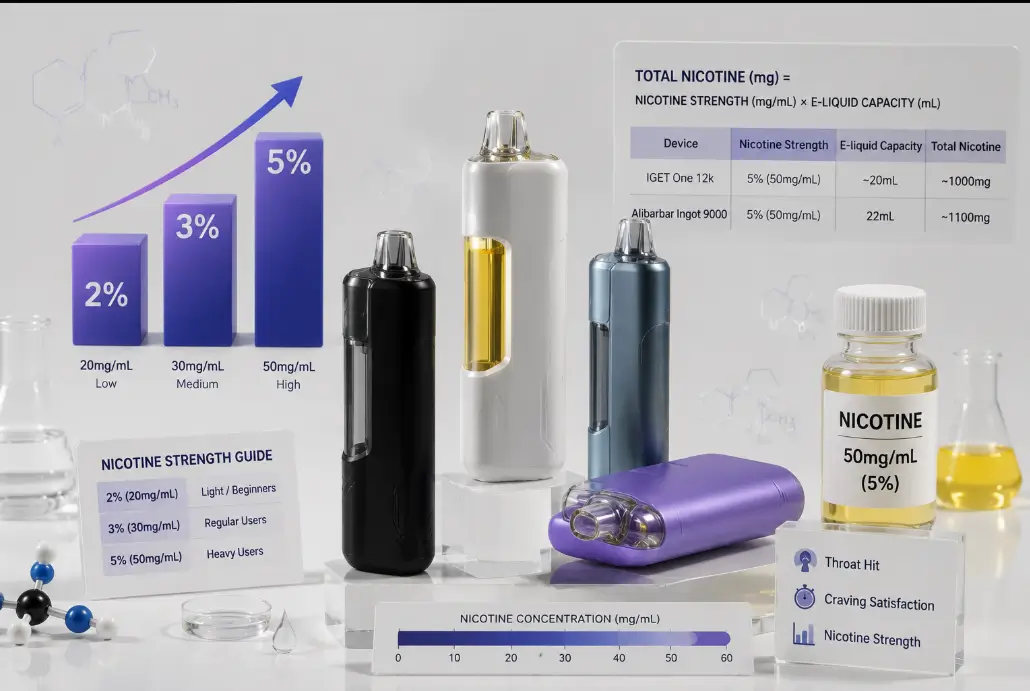
Nicotine strength refers to the concentration of nicotine contained in the e‑liquid inside a disposable vape device. It is typically measured as a percentage (%) or in milligrams per millilitre (mg/mL). A disposable vape labelled as 5% nicotine contains 50 mg of nicotine per millilitre of e‑liquid.
Understanding vape nicotine strength is critical because it directly determines the intensity of the throat hit, the speed of craving satisfaction, and the overall vaping experience. In Australia, disposable vape nicotine strength varies significantly across brands and models, making it essential for adult vapers to understand what these numbers actually mean before making a purchase decision.
For many Australian consumers searching for nicotine content in disposable vapes, the core question is not just about numbers—it is about finding the right balance between satisfaction and safety. Understanding the difference between high vs low nicotine vape strengths helps Australian vapers compare nicotine levels more effectively and choose a device that aligns with their personal needs.
Nicotine and Health: A Note from Health Authorities
The Australian Government Department of Health advises that nicotine is a highly addictive and toxic drug that can harm brain development, particularly in young people, and may impact attention, learning, memory and mood. The World Health Organization (WHO) states that nicotine raises blood pressure and spikes adrenaline, which increases heart rate and the likelihood of having a heart attack. While long-term health effects of vaping are not fully understood, it has been established that e-cigarettes generate toxic substances, some of which are known to cause cancer and some that increase the risk of heart and lung disorders.
How Much Nicotine Is in a Disposable Vape?
The total nicotine content in a disposable vape depends on two primary variables:
Nicotine concentration — the percentage or mg/mL level of nicotine in the e‑liquid
E‑liquid capacity — the total volume of vape juice contained in the device
The formula for calculating total nicotine is straightforward:
Total Nicotine (mg) = Nicotine Strength (mg/mL) × E‑liquid Capacity (mL)
Practical Examples
| Device | Nicotine Strength | E‑liquid Capacity | Total Nicotine |
|---|---|---|---|
| IGET One 12k | 5% (50 mg/mL) | ~20 mL | ~1,000 mg |
| Alibarbar Ingot 9000 | 5% (50 mg/mL) | 22 mL | ~1,100 mg |
This explains why the question “how much nicotine is in a disposable vape” cannot be answered with a single number. The total depends on both the nicotine percentage and the device’s total e‑liquid volume. A 5% vape with 22 mL of e‑liquid will contain significantly more total nicotine than a 5% vape with only 12 mL, even though both have the same concentration.
For Australian vapers comparing nicotine levels in vapes, understanding this distinction is essential when evaluating product specifications and making informed purchasing decisions.
Disposable Vape Nicotine Levels Explained: 2%, 3% and 5%
Disposable vapes commonly feature three primary nicotine strength tiers: 2%, 3%, and 5%. Each serves a different user profile and vaping need.
| Nicotine Percentage | Nicotine Strength (mg/mL) | Strength Category | User Profile |
|---|---|---|---|
| 2% | 20 mg/mL | Low to Moderate | Light smokers, beginners, or those tapering intake |
| 3% | 30 mg/mL | Medium | Regular smokers transitioning to vaping |
| 5% | 50 mg/mL | High | Heavy smokers, high nicotine dependence |
What Does 2% Nicotine Mean in a Vape?
A 2% nicotine vape contains 20 mg of nicotine per millilitre of e‑liquid. This is classified as low to moderate nicotine strength.
In the Australian context, 2% (20 mg/mL) holds particular significance. From 1 October 2024, adults aged 18 years and over can legally purchase vapes with a nicotine concentration of 20 mg/mL or less from participating pharmacies without a prescription, subject to pharmacist consultation and state and territory laws. This makes low nicotine vape options more accessible than ever for Australian adult vapers seeking to reduce their nicotine intake or transition away from smoking.
What Does 5% Nicotine Mean in a Disposable Vape?
A 5% nicotine vape contains 50 mg of nicotine per millilitre of e‑liquid. This is the highest concentration commonly found in disposable vapes and is classified as high nicotine strength.
In practical terms, high nicotine vape delivers a pronounced throat hit and rapid craving satisfaction, making it particularly appealing to heavy smokers transitioning to vaping. Popular devices such as the IGET One 12k and the Alibarbar Ingot 9000 both feature 5% (50 mg/mL) nicotine salt formulations, positioning them as premium high nicotine disposable vape options in the Australian market.
However, under Australian regulations, any vape with a nicotine concentration exceeding 20 mg/mL (2%) requires a prescription from a medical or nurse practitioner, regardless of the user’s age.
Nicotine Salt vs Traditional Nicotine Explained
Most modern disposable vapes employ nicotine salts rather than traditional freebase nicotine. Understanding this distinction is essential for any vaper researching vape nicotine percentage explained content.
What Are Nicotine Salts
Nicotine salts are the naturally occurring form of nicotine found in tobacco leaves. In manufacturing, the nicotine is extracted and combined with organic acids (typically benzoic or levulinic acid) to stabilise the pH level. This chemical process reduces the alkalinity of the nicotine, making it less harsh on the throat at higher concentrations.
Clinical Evidence: Nicotine Salt vs Freebase Absorption
A randomised crossover study published in Nicotine & Tobacco Research (October 2024) investigated the pharmacokinetic and pharmacodynamic effects of different nicotine formulations. Key findings include:
Free‑base 20 mg/mL formulations achieved lower blood nicotine concentrations than nicotine salt 20 mg/mL
40 mg/mL nicotine salt yielded blood nicotine concentrations similar to cigarette smoking
Salt‑based formulations produced higher peak plasma concentrations (Cmax) and were rated as less harsh compared to free‑base formulations
Key Differences
| Feature | Nicotine Salts | Freebase Nicotine |
|---|---|---|
| Throat Hit | Smooth, even at high mg/mL | Harsh at higher concentrations |
| Absorption Speed | Faster; higher plasma concentrations | Slower |
| Nicotine Strength Available | Up to 50 mg/mL (TGO 110 limit) | Typically 3–18 mg/mL |
| Flavour Preservation | Excellent | Good |
| Best For | High‑strength devices, smoking transition | Low‑strength, sub‑ohm vaping |
Why This Matters for Australian Vapers
The use of nicotine salts in devices such as the IGET One 12k, Alibarbar Ingot 9000, and WALA YO 18K allows these products to deliver high nicotine strength in a smooth, palatable form that mimics the nicotine delivery profile of traditional cigarettes.
This is particularly relevant for former smokers who require rapid nicotine absorption to curb cravings effectively. However, it also underscores why Australian regulators have introduced concentration caps—to balance adult access with public health considerations.
Low Nicotine vs High Nicotine Vape: What Is the Difference?
The distinction between low nicotine vape and high nicotine vape goes beyond simple numbers. The difference affects virtually every aspect of the vaping experience.
High Nicotine Vape Characteristics
When searching for a high nicotine disposable vape, users typically seek:
Stronger throat hit — a pronounced sensation that mimics the pull of a cigarette
Faster craving satisfaction — fewer puffs required to feel satiated
Reduced puff frequency — less need to vape continuously throughout the day
Better for heavy smokers — eases the transition from high‑tobacco consumption
Popular high nicotine vape products in Australia include:
| Product | Nicotine Strength | Puff Capacity | Rechargeable |
|---|---|---|---|
| IGET One 12k Black Forest | 5% (50 mg/mL) | 12,000 | Yes (USB‑C) |
| Alibarbar Ingot 9000 Banana Buzz | 5% (50 mg/mL) | 9,000 | No |
Both deliver premium nicotine salt strength at 5%, positioning them as top-tier high nicotine strength devices in the Australian disposable vape segment.
Low Nicotine Vape Characteristics
For those opting for a low nicotine vape, the experience includes:
Milder throat hit — smoother and less intense
Gradual satisfaction — requires more puffs but allows greater control
Tapering capability — ideal for reducing nicotine dependence over time
Better for light smokers or beginners — lower risk of nicotine overexposure
Products with low nicotine strength (2% or 20 mg/mL) are now available without prescription through Australian pharmacies, provided the user is 18 or over and the pharmacist conducts a clinical assessment.
2% vs 5% Nicotine Vape: Head‑to‑Head Comparison
| Feature | 2% Nicotine (20 mg/mL) | 5% Nicotine (50 mg/mL) |
|---|---|---|
| Nicotine per mL | 20 mg | 50 mg |
| Throat Hit Intensity | Mild | Strong |
| Craving Relief Speed | Gradual | Immediate |
| Best Suited For | Light smokers, beginners | Heavy smokers, high dependence |
| Australia Access | Pharmacy OTC (18+) with pharmacist consultation | Prescription required |
How to Choose Between High and Low Nicotine Vape Strength
Choosing the right nicotine strength is one of the most important decisions you will make as a vaper. Here is a practical framework to help you decide between a high vs low nicotine vape.
Step 1: Assess Your Current Smoking Habits
Your previous smoking pattern is the single best predictor of which nicotine strength will work for you.
| Previous Smoking Level | Recommended Starting Nicotine Strength |
|---|---|
| Non‑smoker or occasional | 0 mg/mL (nicotine‑free) |
| Less than 5 cigarettes per day | 2% (20 mg/mL) or lower |
| 5–15 cigarettes per day | 2%–3% (20–30 mg/mL) |
| More than 15 cigarettes per day | 5% (50 mg/mL) — prescription required in Australia |
Step 2: Consider Your Vaping Frequency
How often you plan to vape also matters when evaluating vape nicotine levels:
Frequent, all‑day vaping — A lower nicotine strength (2% or less) may be more appropriate to avoid nicotine overexposure.
Occasional, short sessions — A high nicotine vape (5%) can deliver faster satisfaction in fewer puffs.
Step 3: Understand Your Device’s Delivery Efficiency
Not all devices deliver nicotine with the same efficiency. Nicotine salt formulations in devices like the IGET One 12k and Alibarbar Ingot 9000 provide faster absorption than freebase nicotine at the same concentration. This means a 5% nicotine salt vape may feel stronger than a 5% freebase vape, even though the numbers are identical.
Step 4: Plan Your Reduction Path
Many Australian vapers use disposable vape nicotine strength as a tool for gradual reduction:
5% (high) → 3% (medium) → 2% (low) → 0% (nicotine‑free)
This step‑down approach allows you to maintain control over your nicotine intake while progressively reducing dependence.
Step 5: Factor in Australian Access Requirements
Under current Australian regulations, nicotine strength directly affects how you can access products:
2% (20 mg/mL) or less — Available over‑the‑counter from participating pharmacies for adults 18+ with pharmacist consultation
Above 2% (>20 mg/mL) — Requires a prescription from a medical or nurse practitioner
Understanding the difference between high vs low nicotine vape options helps you navigate these access pathways more efficiently.
Disposable Vape Nicotine Strength in Australia: Key Facts
Australian vaping regulations have undergone significant transformation. Here are the key facts every adult vaper should know about nicotine strength vape Australia:
Key Regulatory Facts (Source: TGA & Australian Government Department of Health)
| Fact | Detail |
|---|---|
| Sales Channel | Pharmacy‑only since 1 October 2024 — tobacconists, vape shops, and convenience stores cannot legally sell vapes |
| Low Nicotine Access | 2% (20 mg/mL) or less available OTC for adults 18+ with pharmacist consultation |
| High Nicotine Access | Above 2% (>20 mg/mL) requires a prescription |
| Maximum Concentration | 50 mg/mL (TGO 110 2024) |
| Flavour Restrictions | Limited to mint, menthol, and tobacco flavours |
| Under 18s | Prescription required in all cases |
| State Variations | Western Australia requires prescription for all nicotine vapes regardless of concentration |
What This Means for You
If you are considering a low nicotine vape (2% or 20 mg/mL), you can access it through a participating pharmacy without a prescription (18+).
If you need a high nicotine vape (5% or 50 mg/mL) — such as the IGET One 12k or Alibarbar Ingot 9000 — you will need a prescription.
Always check your state or territory laws, as additional restrictions may apply.
Frequently Asked Questions About Vape Nicotine Levels
How Much Nicotine Is in a Disposable Vape?
The total amount varies by device. For a 5% vape with 20 mL e‑liquid, total nicotine is approximately 1,000 mg. For a 2% vape with the same capacity, total nicotine is approximately 400 mg. The specific answer depends on both nicotine concentration and e‑liquid volume.
Is 5% Nicotine a Lot?
Yes. 5% (50 mg/mL) is classified as high nicotine strength. It sits above the 2% (20 mg/mL) OTC limit in Australia and delivers a significant nicotine dose per puff.
Is 2% Nicotine Strong?
2% (20 mg/mL) is considered low to moderate nicotine strength. It provides noticeable throat hit and craving relief without the intensity of 5% products. This is the maximum concentration legally available without a prescription in Australia for adults 18 and over, subject to state and territory laws.
What Does 5% Nicotine Mean in a Vape?
A 5% nicotine vape contains 50 mg of nicotine per millilitre of e‑liquid. This is typically delivered using nicotine salts to provide a smooth throat hit at high concentration. This is the predominant strength found in popular disposable vapes such as the IGET One 12k and Alibarbar Ingot 9000.
What Is the Difference Between 2% and 5% Nicotine?
The primary difference is concentration. 2% contains 20 mg/mL, while 5% contains 50 mg/mL. This translates to more than double the nicotine per puff from a 5% device, resulting in stronger throat hit and faster craving satisfaction. In Australia, 2% is OTC accessible (18+, with pharmacist consultation), while 5% requires a prescription.
What Vape Has the Highest Nicotine in Australia?
Among readily available disposable vapes in Australia, the IGET One 12k and Alibarbar Ingot 9000 both feature 5% (50 mg/mL) nicotine salt formulations. Under TGO 110, the maximum permitted nicotine concentration for therapeutic vaping substances in Australia is 50 mg/mL.
Does a Higher Nicotine Vape Last Longer?
No. Puff count is determined by e‑liquid capacity and coil efficiency, not nicotine strength. A 5% vape with 20 mL will deliver approximately the same number of puffs as a 2% vape with 20 mL. However, higher nicotine content means each puff delivers more nicotine, which may reduce the total puffs needed to satisfy cravings.
How Many Cigarettes Equal One Disposable Vape?
The comparison varies by cigarette brand, nicotine absorption rate, and individual usage patterns. Clinical research indicates that 40 mg/mL nicotine salt formulations yielded blood nicotine concentrations similar to cigarette smoking. This underscores the importance of understanding nicotine levels in vapes and choosing appropriate strengths.
What Nicotine Strength Should I Choose?
| User Profile | Recommended Nicotine Strength |
|---|---|
| Non‑smoker or social vaper | 0 mg/mL (nicotine‑free) |
| Light smoker (fewer than 5 cigarettes/day) | 2% (20 mg/mL) or less |
| Regular smoker (5–15 cigarettes/day) | 2–3% (20–30 mg/mL) |
| Heavy smoker (more than 15 cigarettes/day) | 5% (50 mg/mL) – prescription required in Australia |
Note: Vapes are not a “first line” treatment to quit smoking as there is limited evidence about their effectiveness and safety. Consult a healthcare professional for smoking cessation advice.
What Are the Australian Vape Nicotine Laws?
From 1 October 2024, all vapes in Australia are pharmacy‑only. Adults 18+ can purchase vapes with 20 mg/mL (2%) or less without a prescription, subject to pharmacist consultation and state/territory laws. Vapes with higher nicotine concentration require a prescription. Flavours are restricted to mint, menthol, and tobacco.
Conclusion: Choosing the Right Nicotine Strength for Your Vaping Needs
Understanding disposable vape nicotine strength is fundamental to making informed decisions as an adult vaper in Australia. Whether you are transitioning from smoking, seeking to reduce your nicotine intake, or simply exploring the available options, knowing what 2%, 3%, and 5% actually deliver—and how Australian regulations apply—empowers you to choose wisely.
The difference between high vs low nicotine vape options comes down to your personal needs:
| Consideration | Recommendation |
|---|---|
| Heavy smoker looking for strong satisfaction | 5% (50 mg/mL) high nicotine vape — requires a prescription in Australia |
| Light smoker or beginner | 2% (20 mg/mL) low nicotine vape — available OTC (18+) through pharmacies with pharmacist consultation |
| Reducing nicotine dependence | Gradually step down from 5% → 3% → 2% |
| Popular high‑nicotine devices | IGET One 12k (5%, 12,000 puffs, rechargeable) and Alibarbar Ingot 9000 (5%, 9,000 puffs, non‑rechargeable) |
Health and Safety Notice: The Australian Government Department of Health advises that nicotine is highly addictive and can harm brain development in young people. The WHO states that e-cigarettes generate toxic substances, some known to cause cancer and increase the risk of heart and lung disorders. Vapes are not a “first line” smoking cessation treatment due to limited evidence on effectiveness and safety.
The Australian vaping landscape is rapidly evolving. Staying informed about vape nicotine levels, regulatory requirements, and product specifications ensures that your vaping experience remains both satisfying and compliant with local laws. Always verify product specifications before purchasing and consult a healthcare professional if you have questions about nicotine dependence or smoking cessation options.
For the most current information on Australian vaping regulations, refer to: